For the fourth time in the last eleven years, the Detroit Red Wings have won the Stanley Cup, awarded to the champion of the National Hockey League. Since 1990, when Sergei Fedorov joined a lineup that already included Steve Yzerman, the Red Wings have been among the most skilled teams in the NHL.
Although Fedorov is no longer a Red Wing, he is indicative of the success of the franchise. The draft that netted Feodorov for the Red Wings is one of the greatest drafts in NHL history. That same draft for the Red Wings included Center Mike Sillinger and Defenseman Bob Boughner, who both went on to solid NHL careers. It included Winger Dallas Drake, who started with the Red Wings, was traded, and finally returned to the Wings as a free agent this season. It included Vladimir Konstantinov, a magnificent Defenseman who helped the Wings win the Stanley Cup in 1997, alongside his defense partner, Nicklas Lidstrom, who was also part of that same 1989 draft. Lidstrom and Fedorov will be in the Hall of Fame. Konstantinov almost certainly would have been too, had his career not been cut short by a tragic car accident, right after the Wings won the Stanley Cup in 1997. Picking three Hall of Famers in one draft is a good way to rejuvenate a franchise.
Eventually the Wings added three more skilled Russians to their lineup: Slava Kozlov, a skilled young Winger; Slava Fetisov, an aging but skilled defenseman, and Center Igor Larionov, a puck control specialist, as so many Russians were. Coach Scotty Bowman put these five together as a unit, the Russian Five, and they were amazing to watch. They played the same puck control game of the old Soviet national teams.
Eventually, all five of the Russian Five were lost to the Wings, to free agency, retirement, or career ending injury. But the Wings continued to play a puck control, or puck possession game, unlike any other team in the NHL. Because the Wings were so consistently good, they always ended up in poor drafting position. They haven't had a top ten pick since about 1991. Normally they pick at the very bottom of the round, about 20th or lower. So they never have the opportunity to draft the "can't miss" prospects like the Crosby's, the Malkin's, the Ovechkin's, etc.
That doesn't mean they don't draft great players, however. They do. They just have to look harder and smarter to find them. But find them they do. Pavel Datsyuk, Henrik Zetterberg, Tomas Holmstrom, Johan Franzen, Valtteri Filppula, all selected in the third round or later, all star players in the NHL. Datsyuk and Zetterberg, in my opinion, are the two most complete forwards in the NHL. And Nicklas Lidstrom is the best defenseman.
There are now seven Swedes on the Red Wings roster, with more on the way. The Wings are a heavily European weighted team. This is one of the results of having to pick lower in the draft, when all the best North American prospects are already gone. But it is also a result of a deliberate policy of favoring skill over size, which is the opposite of how most teams draft.
The results speak for themselves. Four Stanley Cups in eleven years. People used to accuse the Wings of buying the Stanley Cup, since they had one of the highest payrolls in the league. But when the salary cap was put in place, and the Wings' payroll was cut in half, they continued to be the class of the NHL, consistently finishing first in their division, and advancing well into the playoffs. And now, winning the Stanley Cup again.
The Red Wings are the model franchise of the NHL.
Friday, June 6, 2008


Tuesday, June 3, 2008
The Volga Boatman
In her movie diary for 1926, Ayn Rand gave the Cecil B. De Mille silent movie The Volga Boatman a rating of 5+, the highest rating on her scale. The story is set during the Russian Revolution, and revolves around a love triangle. The woman is a Princess, who is loved by a Russian noble, and by a revolutionary leader. On that level, the plot is similar to AR's We the Living, and no doubt to many other novels.
As in We the Living, the revolutionary, named Feodor, is idealistic, although not nearly as intellectual as Andrei Taganov. The Russian noble, named Dmitri, is brave and arrogant, like Leo. The Princess, named Vera, does not resemble Kira particularly, but does have similarities with another Ayn Rand creation - Dominique Francon.
One scene that emphasizes this connection occurs near the beginning of the movie. Princess Vera hears some Volga boatmen singing as they pass near her home. The Volga boatmen are peasant laborers who pull boats against the current, up the Volga river, by means of ropes harnessed to their bodies. One of the singers in particular catches her ear, and she goes down with Dmitri to investigate who it is that sounds like "the soul of Russia."
So the wealthy young woman goes to look at the laborers, and sees the man she had heard singing, as he and the other boatmen are taking a rest break and a drink of water. She stares at the man, Feodor, in open admiration - and he stares right back, as openly as she. This recalled to my mind the scene in The Fountainhead in which Dominique went to her father's quarry and stared at Roark, who stopped working and stared back.
Then Dmitri intervened, and ended up giving Feodor two lashes across the face with his whip, leaving nasty cuts each time. Feodor took the blows without flinching. This too recalls the same sequence in The Fountainhead, although there it was Dominique who wielded the whip, and not a rival lover.
I don't know, of course, but it seems likely to me that AR wrote that scene as something of an homage to the similar scene in The Volga Boatman.
The movie itself claims to take no side in the conflict of the Russian Revolution, although it pretty clearly does favor the revolutionary side. Still, the heroes all run afoul of the revolution at one point or another.
I recommend the movie, which is available now on DVD.
As in We the Living, the revolutionary, named Feodor, is idealistic, although not nearly as intellectual as Andrei Taganov. The Russian noble, named Dmitri, is brave and arrogant, like Leo. The Princess, named Vera, does not resemble Kira particularly, but does have similarities with another Ayn Rand creation - Dominique Francon.
One scene that emphasizes this connection occurs near the beginning of the movie. Princess Vera hears some Volga boatmen singing as they pass near her home. The Volga boatmen are peasant laborers who pull boats against the current, up the Volga river, by means of ropes harnessed to their bodies. One of the singers in particular catches her ear, and she goes down with Dmitri to investigate who it is that sounds like "the soul of Russia."
So the wealthy young woman goes to look at the laborers, and sees the man she had heard singing, as he and the other boatmen are taking a rest break and a drink of water. She stares at the man, Feodor, in open admiration - and he stares right back, as openly as she. This recalled to my mind the scene in The Fountainhead in which Dominique went to her father's quarry and stared at Roark, who stopped working and stared back.
Then Dmitri intervened, and ended up giving Feodor two lashes across the face with his whip, leaving nasty cuts each time. Feodor took the blows without flinching. This too recalls the same sequence in The Fountainhead, although there it was Dominique who wielded the whip, and not a rival lover.
I don't know, of course, but it seems likely to me that AR wrote that scene as something of an homage to the similar scene in The Volga Boatman.
The movie itself claims to take no side in the conflict of the Russian Revolution, although it pretty clearly does favor the revolutionary side. Still, the heroes all run afoul of the revolution at one point or another.
I recommend the movie, which is available now on DVD.
Friday, May 30, 2008
Silent Movies
Silent movies seem to be an acquired taste. I usually have a hard time watching them. They seem hopelessly archaic compared to modern movies. But while the technology of silent films certainly is archaic, the stories themselves are not. And since these movies were made in the early twentieth century, they are less infected with all the maladies of the modern intellectual and literary world. Silent movies are closer in time to the era of Romantic art - Cyrano de Bergerac was published in 1897 - and so some of that spirit exists in them which no longer survives in the modern world.
Among the silent movies that were enjoyed by the arch-romanticist, Ayn Rand, were The Indian Tomb (Part 1: The Mission of the Yogi; Part 2: The Tiger of Bengal), The Nibelungen (Part 1: Siegfried; Part 2: Kriemhild's Revenge), The Thief of Baghdad, The Mark of Zorro (and many other silent films starring Douglas Fairbanks), The Oyster Princess, and The Volga Boatman. All of the above movies are availabe on DVD now, and more seem to be coming on the market all the time.
One I recently watched is The Winning of Barbara Worth, starring Ronald Colman, Vilma Banky, and Gary Cooper. This movie still has something of the heroic spirit of nineteenth century America in it, when American businessmen and engineers were taming the vast expanses of the West. Colman is an Eastern engineer who comes out West to build a dam to bring water to a desert wilderness and bring it to fruitful life. Gary Cooper is a native Westerner who is initially unimpressed with the soft Easterner. Vilma Banky is the woman they both adore.
The financier who funds the building of the dam is a villain who is willing to rob and kill to defeat his competitors. When this becomes clear, Colman switches sides, and convinces another Eastern financier to rescue the project (which suffered through a natural disaster), by appealing to his self interest, as well as his good will.
Colman is the hero of the story, who transforms the desert into farmland, against the natural obstacles, and against the man made interference. Cooper is a rugged Westerner who helped him achieve that goal, in spite of their rivalry over Vilma Banky.
It's a benevolent silent movie I can recommend. It's not a bad starting place if you want to begin exploring the world of silent movies.
Among the silent movies that were enjoyed by the arch-romanticist, Ayn Rand, were The Indian Tomb (Part 1: The Mission of the Yogi; Part 2: The Tiger of Bengal), The Nibelungen (Part 1: Siegfried; Part 2: Kriemhild's Revenge), The Thief of Baghdad, The Mark of Zorro (and many other silent films starring Douglas Fairbanks), The Oyster Princess, and The Volga Boatman. All of the above movies are availabe on DVD now, and more seem to be coming on the market all the time.
One I recently watched is The Winning of Barbara Worth, starring Ronald Colman, Vilma Banky, and Gary Cooper. This movie still has something of the heroic spirit of nineteenth century America in it, when American businessmen and engineers were taming the vast expanses of the West. Colman is an Eastern engineer who comes out West to build a dam to bring water to a desert wilderness and bring it to fruitful life. Gary Cooper is a native Westerner who is initially unimpressed with the soft Easterner. Vilma Banky is the woman they both adore.
The financier who funds the building of the dam is a villain who is willing to rob and kill to defeat his competitors. When this becomes clear, Colman switches sides, and convinces another Eastern financier to rescue the project (which suffered through a natural disaster), by appealing to his self interest, as well as his good will.
Colman is the hero of the story, who transforms the desert into farmland, against the natural obstacles, and against the man made interference. Cooper is a rugged Westerner who helped him achieve that goal, in spite of their rivalry over Vilma Banky.
It's a benevolent silent movie I can recommend. It's not a bad starting place if you want to begin exploring the world of silent movies.
Saturday, April 5, 2008
Dae Jang Geum
This review contains some spoilers.
I recently finished watching a wonderful Korean television drama called Dae Jang Geum, aka Jewel in the Palace. It is available on DVD, in the original Korean with English subtitles. In briefest summary, the drama tells the story of Jang Geum, an orphaned girl who rises from the lowest classes of Korean society to become the personal physician of the King.
The struggles Jang Geum faces along the way are enough to crush the spirit of a normal man or woman. But Jang Geum is an extraordinary woman. No opponent can overcome her indomitable spirit, no obstacle or setback can impede her progress for long. She sets her sights on the goals she wants to achieve, and she moves toward them with determination, intelligence, and passion, without ever compromising her integrity or honor. She is a true Heroine of Romantic art.
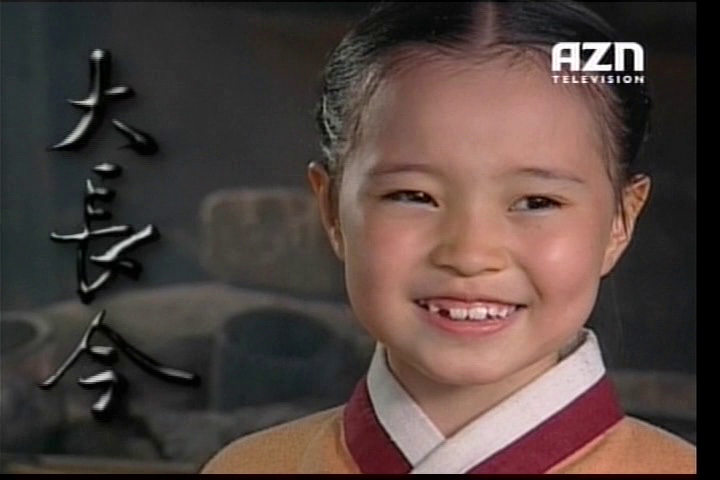
The series starts out with several episodes showing Jang Geum as a young girl, around 8 years old. From her first appearance on the screen, she conquers the viewer’s heart completely. Never have I seen such an adorable little girl. Her smile outshines the sun. But then she wins the viewer’s mind as well, when she displays her passionate intellectual curiosity, her stubborn determination, her courage and integrity.
I recently finished watching a wonderful Korean television drama called Dae Jang Geum, aka Jewel in the Palace. It is available on DVD, in the original Korean with English subtitles. In briefest summary, the drama tells the story of Jang Geum, an orphaned girl who rises from the lowest classes of Korean society to become the personal physician of the King.
The struggles Jang Geum faces along the way are enough to crush the spirit of a normal man or woman. But Jang Geum is an extraordinary woman. No opponent can overcome her indomitable spirit, no obstacle or setback can impede her progress for long. She sets her sights on the goals she wants to achieve, and she moves toward them with determination, intelligence, and passion, without ever compromising her integrity or honor. She is a true Heroine of Romantic art.
The series starts out with several episodes showing Jang Geum as a young girl, around 8 years old. From her first appearance on the screen, she conquers the viewer’s heart completely. Never have I seen such an adorable little girl. Her smile outshines the sun. But then she wins the viewer’s mind as well, when she displays her passionate intellectual curiosity, her stubborn determination, her courage and integrity.
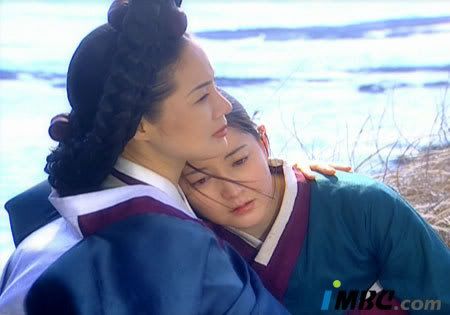
With episode six, the story moves ahead in time. Jang Geum is a young woman of 20 or so. Under the tutelage of Lady Han, Jang Geum has become one of the most promising kitchen ladies of the palace. Her only rival is Keum Young, whose family has produced the last five Head Kitchen Ladies of the palace. One of Jang Geum’s goals is to become the Head Kitchen Lady. But Keum Young’s aunt, Lady Choi, will stop at nothing to keep that office in her family’s possession.
And so Jang Geum and Lady Han are subjected to repeated attempts by the Choi clan to discredit and defeat them, by fair means or foul. Neither Lady Han nor Jang Geum ever stoop to their level, regardless of consequence. Several times their lives hang in the balance. But they will achieve their goals with honor, or not at all.
One of the things which sets Jang Geum apart from all others is her intellectual curiosity. While others are content to follow whatever was done in the past, as passed down in books or by word of mouth, Jang Geum insists on determining for herself what is best through experimentation and logical thought, even if this goes against what others are doing, or have done in the past, or against the book authorities. Both in her cooking, and later in her medical practice, she uses the scientific method of testing ideas with experiments, and of gathering evidence out in the field, whether that meant studying all the herbs in the vicinity, or testing the water, or examining patients and their symptoms and observing their reactions to various medical prescriptions.
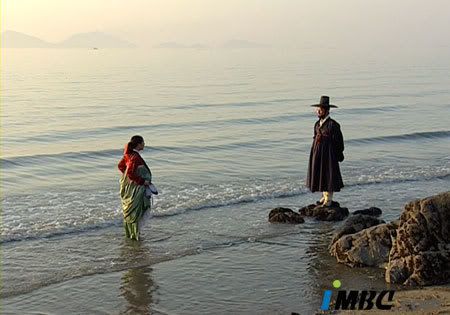
Another strand of the story involves a Royal Guard of the scholar-official class, Min Jeong Ho, who falls in love with Jang Geum. Like Jang Geum and Lady Han, Min Jeong Ho is a man of honor and integrity. His love for Jang Geum is a virtually hopeless romance, because court ladies such as Jang Geum are forbidden romantic relationships with anyone other than the King. If the King never shows any interest in them, then they will have to live their entire life without the love of a man. Jang Geum, however, does fall in love with Min Jeong Ho, and their struggle to resolve this dilemma is one of the major value conflicts of the story.
Complicating their relationship further, Jang Geum’s rival, Keum Young, is also in love with Min Jeong Ho. It is no light infatuation, but a love which will change the entire course of Keum Young’s life in ways that are heartbreaking to see unfold.
When Jang Geum transforms herself into a physician, she begins to have regular contact with the King. To the King’s credit, he too falls in love with Jang Geum. But to make Jang Geum his concubine - the King already has a Queen - would ruin her happiness, and the King discovers this. This is another of the dramatic value conflicts that must somehow be resolved.
Dae Jang Geum is so full of dramatic value conflicts I can’t begin to touch on them all. The contrast between Jang Geum’s way of resolving her conflicts, and the way others do, highlights her larger than life, heroic spirit and integrity. Some of the characters run away from conflicts; some are not strong enough and give in, and are weighed down with guilt; some resort to dishonorable methods to get their way; only Jang Geum and Min Jeong Ho never compromise their principles.
The antagonists of the story, especially Lady Choi and Keum Young, serve an important purpose by providing a contrast to Jang Geum’s heroism. Keum Young began as a highly skilled and precocious young lady, generous to her only rival in the kitchen, Jang Geum. But when her supreme value proved to be out of her reach, her spirit was broken, and she sadly became vindictive and dishonorable. Her aunt, Lady Choi, also started out as an innocent child with benevolent goals and dreams. Both of them could remember the time in their youth when so much had been possible. Their downfall is the all-too-common human tragedy of a great potential, given up on, never fulfilled.
Like the heroes of Victor Hugo’s Romantic novels, the heroes of Dae Jang Geum remain loyal to their values to the end, no matter the struggles they must endure to achieve them. In contemplating the lives of Jang Geum and Min Jeong Ho, of Lady Han and Lady Jung, we see life being lived as it could be, and ought to be. Their values may not be the same as ours, just as the values of Lantenac and Cimourdain (two of the central characters of Hugo's novel, Ninety-three) are not ours. But, as Ayn Rand wrote, referring to those characters: “What greatness men are capable of, when they fight for their values!”
It is such a sad, stark contrast to the flippancy, the vulgarity, the cynicism, the mock-heroism of contemporary American drama, whether on television or in movies. Seeing heroic characters who take their lives, their loves, their goals seriously, who do not laugh at themselves, is an inspiration not to be missed. I urge you to take a chance on this foreign production, an unexpected gift from a talented Korean writer to the world.
There is a website, aznVtv - The Best in Asian TV, at which you can watch every episode of Dae Jang Geum. You may need to download the Winamp player, which is free on the website. Here is the url: http://aznv.tv/en/
For a brief sample of the show, you can view many clips on YouTube.

Sunday, March 2, 2008
The "Disproportionate Use of Force"
Palestinian terrorists have been launching rockets into Israel on a daily basis for months. Occasionally, Israel responds by air assaults on the rocket launchers, or on the leadership responsible for the offensive. Recently the rocket attacks have become more frequent and are reaching further into Israel.
Belatedly, Israel decided to respond more forcibly, with an incursion into Gaza by its ground forces. This is still inadequate. They have evidently only gone two or three miles inside Gaza, while the rocket launchers can operate from at least 15 miles deep in Gaza.
Nevertheless, even this inadequate response has drawn howls of outrage from the Palestinians, and the United Nations, as usual, weighed in on the side of the Palestinians, accusing Israel of responding with a "disproportionate use of force."
There is no such thing as a "disproportionate use of force" in defense against an aggressor. As the United States properly used all weapons at its disposal - including nuclear weapons - against the Japanese in WWII, so Israel can and should use all the force at its disposal to crush the Palestinian aggression until they cease to be aggressors.
How convenient the world would be for aggressors if their victims adhered to this insane doctrine of "proportionate use of force" in response to being attacked. Imagine hordes of Chinese attacking Taiwan in a maritime invasion, using only spears and rocks against the island's defenders. Adhering to the "proportionate use of force" doctrine, the Taiwanese use only spears and rocks in response. What happens? The Chinese easily defeat the moronic defenders, because there are more Chinese than Taiwanese. In short, the Taiwanese defeated themselves.
This is exactly what the Palestinians, and all the other countries in the Middle East that are hostile to Israel, want Israel to do. It is a recipe for national suicide. Yet the UN supports it, and so do many individual countries, including the United States.
No wonder aggressors are so emboldened in this era of moral grayness and moral "neutrality."
Belatedly, Israel decided to respond more forcibly, with an incursion into Gaza by its ground forces. This is still inadequate. They have evidently only gone two or three miles inside Gaza, while the rocket launchers can operate from at least 15 miles deep in Gaza.
Nevertheless, even this inadequate response has drawn howls of outrage from the Palestinians, and the United Nations, as usual, weighed in on the side of the Palestinians, accusing Israel of responding with a "disproportionate use of force."
There is no such thing as a "disproportionate use of force" in defense against an aggressor. As the United States properly used all weapons at its disposal - including nuclear weapons - against the Japanese in WWII, so Israel can and should use all the force at its disposal to crush the Palestinian aggression until they cease to be aggressors.
How convenient the world would be for aggressors if their victims adhered to this insane doctrine of "proportionate use of force" in response to being attacked. Imagine hordes of Chinese attacking Taiwan in a maritime invasion, using only spears and rocks against the island's defenders. Adhering to the "proportionate use of force" doctrine, the Taiwanese use only spears and rocks in response. What happens? The Chinese easily defeat the moronic defenders, because there are more Chinese than Taiwanese. In short, the Taiwanese defeated themselves.
This is exactly what the Palestinians, and all the other countries in the Middle East that are hostile to Israel, want Israel to do. It is a recipe for national suicide. Yet the UN supports it, and so do many individual countries, including the United States.
No wonder aggressors are so emboldened in this era of moral grayness and moral "neutrality."
Thursday, February 28, 2008
Coddling Dictators
Barack Obama has said that if he is elected President, he will pay a visit to Cuba to talk with its current ruler, Raul Castro. Castro, of course, is a dictator, just as his brother Fidel was. In any case, it is a shameful idea. As Ayn Rand correctly pointed out long ago (from Galt's speech in Atlas Shrugged):
In any compromise between food and poison, it is only death that can win. In any compromise between good and evil, it is only evil that can profit. In that transfusion of blood which drains the good to feed the evil, the compromiser is the transmitting rubber tube . . .
Saturday, February 23, 2008
A Republic - If You Can Keep It

The Founding Fathers bequeathed to us a glorious Republic based on the inalienable rights of Man. We squandered that bequest long ago. How do we get it back?
The course of human events is moved by philosophy. When a rational philosophy (such as Aristotelianism) is dominant, freedom expands. When an irrational philosophy (such as Platonism) is dominant, freedom contracts. As an Objectivist, I am working toward the re-establishment of a dominant rational philosophy - namely, Objectivism. How long will this take?
In discussing this with me, a friend and fellow Objectivist wrote "when I think about how much effort is required to grasp Objectivism, I am less than confident about the future of our society."
I think that is the key. Objectivists sometimes talk about how quickly Marxism became a worldwide phenomenon. The implication being that Objectivism might duplicate that feat. But the point is, Marxism wasn't intellectual at all. It was just a call to rob the rich and give to the poor. "From each according to his ability, to each according to his need." That's all people took away from Marxism and that's why they - the poor, the lazy, the envious - flocked to its standard. And why they still do, under different names, like modern liberalism, environmentalism, compassionate conservatism, and the anything-goes catch all, "democracy."
Objectivism is exactly the opposite. People, if they understand it, are more likely to run away screaming, than flock to it. They don't want to have to think, they don't want to have to work, they don't want to have to be responsible for their own welfare. Establishing and maintaining a Republic is damned hard work. To quote Benjamin Franklin, in answer to someone who asked him what kind of government the Constitutional Convention of 1787 had come up with: "A Republic - if you can keep it."
We failed to keep it. We will have to duplicate the efforts of the Founding Fathers and their generation - the genuine "greatest generation" - to regain a Republic based on individual rights. It will not happen quickly, or easily. There is no royal road to a just society.
Thursday, February 21, 2008
Philosophy: Who Needs It

Everyone needs philosophy, was Ayn Rand's answer to that question, which she gave in an address to the graduating class at West Point in 1974. Everyone lives according to some philosophy, whether they realize it or not.
As Ayn Rand said in her address:
. . . the principles you accept (consciously or subconsciously) may clash with or contradict one another; they, too, have to be integrated. What integrates them? Philosophy. A philosophic system is an integrated view of existence. As a human being, you have no choice about the fact that you need a philosophy. Your only choice is whether you define your philosophy by a conscious, rational, disciplined process of thought and scrupulously logical deliberation - or let your subconscious accumulate a junk heap of unwarranted conclusions, false generalizations, undefined contradictions, undigested slogans, unidentified wishes, doubts and fears, thrown together by chance, but integrated by your subconscious into a kind of mongrel philosophy and fused into a single, solid weight: self-doubt, like a ball and chain in the place where your mind's wings should have grown.
So if you want to know yourself better, if you want to gain conscious control of your life, your decisions, your judgments, if you want to understand what causes your emotions, you must learn to engage in introspection.
Do you, for example, hate profit-chasing Big Oil executives? Your answer to that question, whether negative or affirmative, reveals a part of your implicit philosophy. If you dislike the desire for profit, ask yourself why. Perhaps you believe profits are immoral. Dig down another step: why do you hold that profits are immoral? Some will answer: because the desire for profit is selfish. For these people, this answer reveals that altruism is their moral philosophy, their ethics. Altruism is the moral code which holds that service to others -selflessness - is the good, and selfishness is the evil. Think Mother Teresa, the most well known altruist in recent times.
Anything opposed to altruism, such as the pursuit of profit, is immoral to an altruist. Dig further into your philosophy and ask yourself why altruism is your moral philosophy. In pursuing these elusive answers, you will be getting at your philosophical premises.
The purpose of this exercise in self-examination is to become aware of the philosophical premises that have been guiding your life subconsciously - without your authorization, so to speak. Most people will find some of the premises they have adopted, somewhere along the way, are not supportable upon close examination. Then discard them, and replace them with premises you can support.
After a lifetime of persistent self-examination, and of pestering others to do the same, the Greek philosopher, Socrates, was convicted of corrupting the minds of the young. He faced the death penalty, but it was suggested he might be allowed to live if he would accept exile, and cease to be the annoying philosophical gadfly he admitted to being. He refused the offer. The unexamined life, he said, is not worth living.
Sunday, February 17, 2008
Ragtime: A Musical Interlude
An example of the benevolent spirit of ragtime music.
http://www.youtube.com/watch?v=pGyQmKmIMp4
I generally prefer solo piano ragtime, but this is an excellent banjo version of Dill Pickles Rag, by Charles Johnson.
http://www.youtube.com/watch?v=pGyQmKmIMp4
I generally prefer solo piano ragtime, but this is an excellent banjo version of Dill Pickles Rag, by Charles Johnson.
Poetic Interlude
To Helen
Helen, thy beauty is to me
Like those Nicean barks of yore,
That gently, o'er a perfumed sea,
The weary, wayworn wanderer bore
To his own native shore.
On desperate seas long wont to roam,
Thy hyacinth hair, thy classic face,
Thy Naiad airs have brought me home
To the glory that was Greece
And the grandeur that was Rome.
Lo! in yon brilliant window-niche
How statue-like I see thee stand,
The agate lamp within thy hand!
Ah, Psyche, from the regions which
Are Holy Land!
Edgar Allan Poe
Helen, thy beauty is to me
Like those Nicean barks of yore,
That gently, o'er a perfumed sea,
The weary, wayworn wanderer bore
To his own native shore.
On desperate seas long wont to roam,
Thy hyacinth hair, thy classic face,
Thy Naiad airs have brought me home
To the glory that was Greece
And the grandeur that was Rome.
Lo! in yon brilliant window-niche
How statue-like I see thee stand,
The agate lamp within thy hand!
Ah, Psyche, from the regions which
Are Holy Land!
Edgar Allan Poe
Wednesday, February 13, 2008
Ecce Homo

Howard Roark, intransigent architect hero of Ayn Rand's novel, The Fountainhead, is one of the most inspiring creations in the history of literature. He had his own ideas about what and how to build, and he turned them into reality in spite of all the obstacles a timid and envious society could hurl against him.
Much more inspiring, though, is an intransigent hero who actually existed. Behold the man, Wilbur Wright. The oldest dream of man was to fly. Icarus, Bellerophon on Pegasus, flying carpets, and countless other myths and fables show the dream realized in fiction. Leonardo Da Vinci, a hero of the Renaissance, worked on making the dream a reality, but it was too early. Technology was not yet advanced enough.
When the technology was ready, Wilbur Wright (and to a lesser extent, Orville Wright) stepped forward and engineered the marvel of powered flight. From the dauntless self-confidence needed to believe he could achieve this "impossible dream," through long hours of research, countless brilliant experiments, successes and setbacks - all funded from the Wrights' own savings - to the epoch making first flight at Kill Devil Hills (near Kitty Hawk), Wilbur Wright overcame every obstacle.
He conquered the sky.
Wilbur Wright is man, the hero. Next time someone moans that he is "only human," remind him of what heroes men can be, by pointing to Wilbur Wright.
Monday, February 11, 2008
Once Upon a Time in America

With a population of some three million, colonial America produced more Statesmen than modern America can produce with her 300 million. How can that be, when we have the advantage of public education?
America still produces brilliant and ambitious men. But none of them yearn to be part of our Government, as they did in our Revolutionary days. Those were days of ferment when great things were being accomplished in government, namely the enshrinement of man's inalienable rights in the Declaration of Independence, the Constitution, and the Bill of Rights, and the establishment of a Republic - a nation of laws, and not of men.
What is government doing today? The long train of abuses and usurpations one could list would put those of King George III to shame. Nobody with any honor or self-respect would agree to be part of such a government, except with the express purpose of annihilating the work of the last century of misgovernment.
There are no such Statesmen today, anywhere upon the landscape.
Sunday, February 10, 2008
To Whom It May Concern

The title of my blog refers to the song from The Sound of Music. I admire the song for its dedication to freedom in the face of advancing totalitarian forces. The alpine flower, edelweiss, is used in the song to symbolize freedom.
" . . . blossom of snow
may you bloom and grow,
bloom and grow forever.
Edelweiss, edelweiss,
bless my homeland forever."
From Rodgers & Hammerstein's The Sound of Music.
Subscribe to:
Posts (Atom)